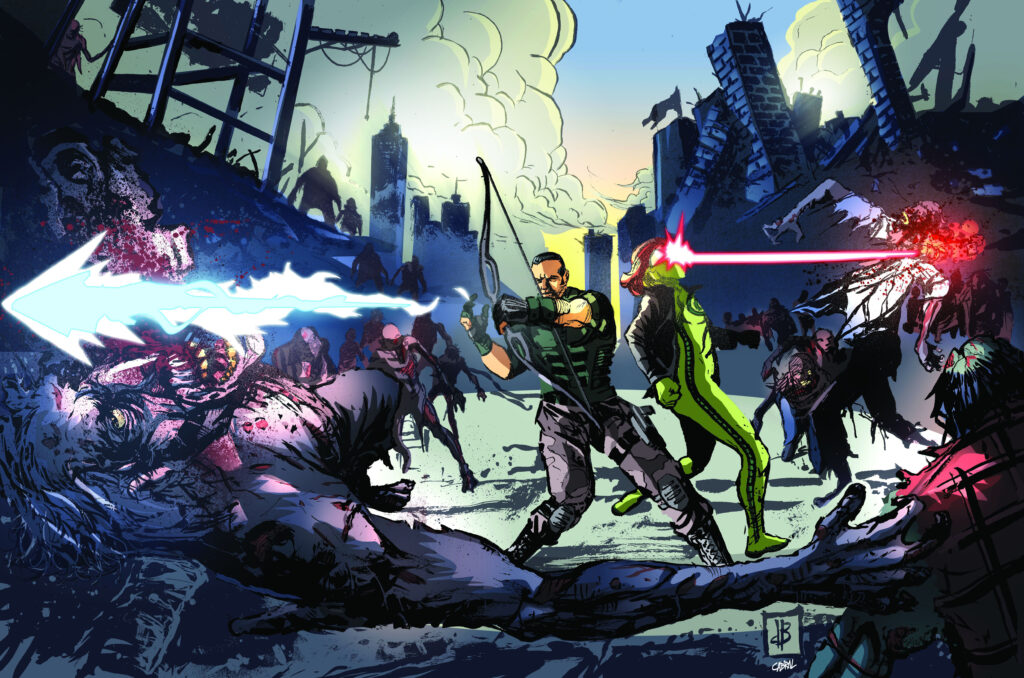
One of the things that always bugged me about a lot of RPG combat is how flat it feels. You roll initiative, you take turns, you trade hits, and that’s… kind of it. The scenery doesn’t matter unless someone remembers it. The villain fights exactly the same way at full health as they do on their last leg. And a dozen weak enemies somehow feel less threatening than a single strong one, even though that’s not how danger works.
Combat Modes in Rotted Capes exist because fights shouldn’t stay static. When the situation changes, the rules should change with it.
That’s what Combat Modes are: moments where the fiction pushes hard enough that the system responds. Not with more math, not with extra stat blocks, but by shifting how the fight behaves.
There are three of them, and each exists to solve a very specific problem.
Hordes: Because Zombies Don’t Line Up One at a Time
Zombies aren’t scary because one of them is tough. They’re scary because they don’t stop coming.
Running ten identical enemies as ten separate turns is miserable. It slows the game down, bloats initiative, and turns what should feel overwhelming into busywork. Hordes fix that by letting the Editor-in-Chief collapse five or more identical creatures in the same Area into a single, unified threat.
Mechanically, the Horde acts as one creature. Narratively, it’s a mass of bodies, arms, teeth, and pressure. As long as the Horde stays together, it hits harder and more accurately the larger it gets. As the heroes cut it down, it weakens in a very visible way. You can feel progress without the fight dragging.
What I like most about Hordes is that they reward smart play. Area effects matter. Control powers matter. Positioning matters. Ignoring a growing Horde is a great way to get overwhelmed, which is exactly how zombie fiction should feel.
It keeps the pacing tight while making the threat feel bigger, not smaller.
Unleashed: When the Villain Drops the Mask
Every good villain has a moment where they stop testing the heroes.
Unleashed is that moment.
This isn’t about giving the villain a cheap power-up or pulling a “gotcha.” It’s about acknowledging something we all already do in our heads: some threats are holding back, waiting to see if the heroes are actually worth the effort.
When a villain is Unleashed, the fight escalates. They react faster. They take more actions. They get harder to put down. They stop playing defense and start trying to end the fight. Mechanically, that shows up as extra reactions, multiple turns based on party size, stamina spikes, and a once-per-fight second wind.
The important part is restraint. Not every villain should be Unleashed. This is a spotlight tool. You use it when the story demands it: the end of an arc, a Super-Zombie that’s finally cornered, or a fight the heroes are cruising through that should feel desperate.
When you say “this villain is Unleashed,” you’re telling the table something very clear: this isn’t a normal fight anymore. Bring your A-game.
And when the heroes win anyway, it feels earned.
Danger Zone: When the Environment Turns Hostile
Sometimes the biggest threat in a fight isn’t the enemy. It’s the building you’re standing in.
Danger Zones are how Rotted Capes handles collapsing structures, fires, floods, smoke, alarms, unstable floors, and all the other things that make fights messy and terrifying. When a Danger Zone is active, the environment gets its own turn in the initiative order. It does things. It forces saves. It causes damage. It creates new problems.
The key thing here is that Danger Zones aren’t meant to steal the spotlight. They’re there to force movement, split attention, and create pressure. Standing still becomes a bad idea. Ignoring the environment becomes dangerous. Players have to decide whether to focus on the villain, save bystanders, or stop the world from killing them first.
This is also where Plot Points shine. Heroes who think creatively, spend narrative currency, or engage with the scene instead of just the stat blocks can mitigate or even shut down environmental threats.
Used well, a Danger Zone doesn’t make a fight longer. It makes it sharper.
Why Combat Modes Exist at All
Combat Modes aren’t optional flair. They’re structural.
They exist because combat should escalate when the story escalates. Because zombies should feel overwhelming, villains should feel terrifying at the right moment, and the world should never feel like a static backdrop.
Instead of adding more monsters, inflating numbers, or rewriting encounters on the fly, Combat Modes let the Editor-in-Chief change the rules of engagement in a way that’s visible, fair, and rooted in the fiction.
When the fight changes, the game changes with it.
That’s the point.